
Renters insurance is one of the cheapest, most underused safety nets out there. Here's what it actually costs, what it covers, what it doesn't, and what pushes your premium up or down.
This is general information, not personalized insurance advice. Talk with a licensed agent about the right coverage for your situation.
Get a renters insurance quote in minutes.
What is apartment renters insurance?
Renters insurance protects your personal belongings, covers your liability if someone's hurt in your apartment, and pays for temporary living expenses if your unit becomes unlivable after a covered event like fire or vandalism.
Here's the basic mechanics: you pay a premium (monthly, semi-annually, or annually) to keep the policy active. If something covered happens, you pay a deductible — a set out-of-pocket amount — before the insurer covers the rest, up to your coverage limit, the maximum the policy will pay out.
What does renters insurance actually cover?
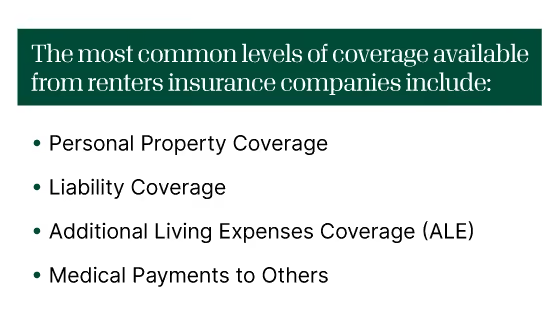
Personal property coverage
Covers repair or replacement of your belongings — furniture, electronics, clothing, appliances — after a covered event like fire, theft, or vandalism. If a fire damages your furniture and electronics, or a burglar takes your laptop and jewelry, this is the coverage that reimburses you, up to your policy limit and minus your deductible.
Liability coverage
Covers you if you accidentally injure someone or damage their property. If a guest slips in your apartment and breaks an arm, or your kid puts a soccer ball through a neighbor's window, liability coverage helps with the medical bills, repair costs, or legal fees that follow.
Additional living expenses (ALE), also called loss of use
Pays for temporary living costs — hotel, meals, transportation — if a covered event makes your apartment unlivable. A burst pipe that floods your unit, or a fire that forces a building evacuation, are the kinds of events this covers.
Medical payments to others
Covers immediate medical costs for a guest injured on your property, regardless of fault. This is narrower and faster than liability coverage — think an ER visit after a fall, or a dog bite — and doesn't require anyone to prove you were negligent.
Coverage limits vary by provider and policy, so it's worth reviewing the details and asking an agent about riders or endorsements if you have items worth more than your standard limits.
What renters insurance doesn't cover
Normal wear and tear. Gradual deterioration, aging materials, and lack of maintenance aren't a "loss" an insurer will pay out on.
Intentional damage. Damage you cause on purpose isn't covered, and filing a claim on self-inflicted damage can expose you to insurance fraud charges.
Business activity. If you run a business out of your apartment, renters insurance won't cover business losses — a fire caused by your side-hustle equipment needs separate business insurance.
Structural damage to the building. Renters insurance is "walls-in" coverage — it protects you and your belongings, not the building itself. That's on your landlord's policy.
Flood damage. Standard policies typically cover water damage from an internal failure, like a burst pipe, but exclude flooding from storms or natural disasters. That requires separate flood insurance.
Earthquake damage. Also excluded from standard policies and requires its own separate policy.
High-value items. Jewelry, art, and collectibles are often subject to lower sub-limits than their actual value. A rider or floater covers the gap.
From cozy studio apartments to elaborate rented condominiums, the cost varies depending on the level of protection you select.

What affects the cost of renters insurance?
Location. Areas with higher crime rates or natural disaster risk cost more to insure.
Deductible amount. A higher deductible means you absorb more risk, which lowers your premium. A lower deductible shifts more risk to the insurer, raising your premium.
Coverage amount. More personal property or liability coverage means more potential payout for the insurer, so premiums rise with coverage.
Type of coverage. Actual cash value (ACV) policies pay out based on depreciated value and cost less. Replacement cost value (RCV) policies pay to replace items at current prices and cost more.
Insurance history. Frequent past claims, lapses in coverage, or cancelled policies signal higher risk to insurers and raise your rate. A clean history helps you qualify for lower premiums.
Credit-based insurance score. In most states, insurers use a credit-based score as a rating factor, and better scores generally mean lower premiums. This is legally restricted in some places — California, Massachusetts, and Maryland ban the use of credit history for homeowners and renters insurance pricing, so this factor may not apply depending on where you live (Experian).
Security measures. Smoke detectors, doorbell cameras, alarms, and deadbolts can lower your premium by reducing theft and damage risk.
Dog ownership. Some insurers charge more for liability coverage on breeds they consider higher-risk — Pit Bulls, Rottweilers, Doberman Pinschers, German Shepherds, Chow Chows, and a handful of others commonly appear on these lists (Forbes Advisor). This varies a lot by insurer, though — some, like State Farm, don't factor in breed at all and look at a dog's individual bite history instead. Worth asking directly rather than assuming.
What's the average cost of renters insurance?
Nationally, renters insurance runs around $15 to $20 a month for a standard policy (roughly $20,000 in personal property and $100,000 in liability coverage), though it can range from about $9 to $36 a month depending on your state and coverage (MoneyGeek).
Some of the more affordable states right now include Wyoming, Wisconsin, North Dakota, and Iowa. The priciest tend to be Louisiana, Mississippi, Florida, and Alabama — largely a reflection of hurricane and severe storm risk in the Gulf Coast and Southeast.
With Homebody, policies can start as low as $7 a month depending on your coverage needs and location — on the low end of the national range, and enough in most cases to meet a typical apartment community's liability insurance requirement.
Bottom line
For a few dollars a month, renters insurance covers far more than most people realize, and the gaps (floods, earthquakes, business use, high-value items) are worth knowing before you need them, not after. Get a quote and see what it costs for your apartment.
The basics of what renters insurance is and how it functions are covered in-depth in Homebody's thorough guide to figuring out the price and coverage of apartment renters insurance. Average monthly charges range from $10 to $30 depending on region, deductible size, coverage type, and insurance history, among other factors. Get in there.

.avif)