
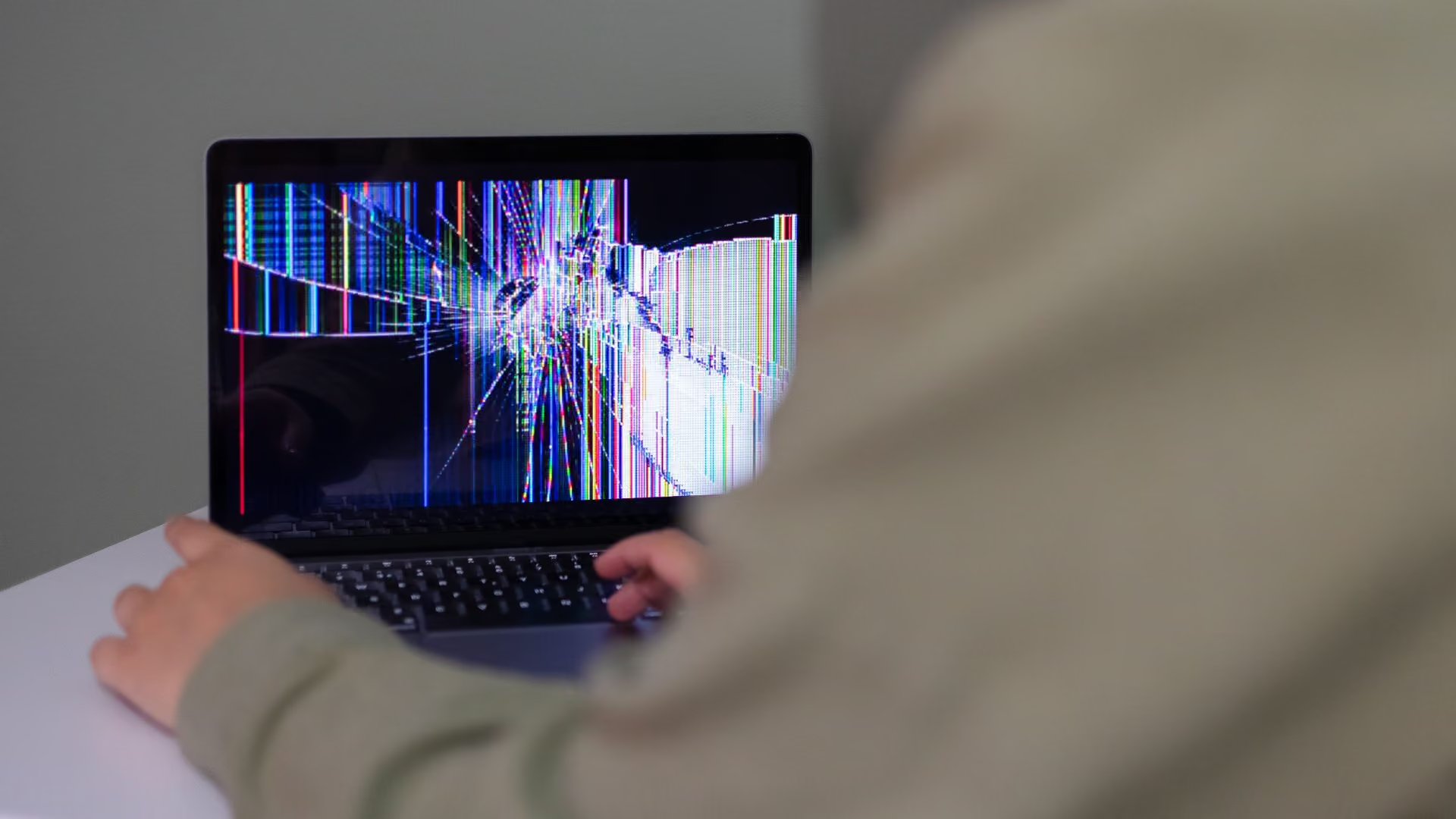
Your phone slips out of your hand on the subway platform and lands screen-first on concrete. Now you're staring at a spiderweb of cracks across the screen you use for work, banking, and basically your entire life. It's one of the most common — and most underrated — financial emergencies renters face.
Renters run on tech, but nearly half of renter households have less than $1,000 in emergency savings to absorb a surprise repair bill. A single broken phone in 2026 costs real money — $300–$500 to repair, or $900–$1,400 to replace outright. Device protection turns that shock expense into a predictable one: a small monthly cost instead of a budget-wrecking lump sum. Renters insurance isn't built for this — it typically covers fire and theft, not the everyday drops and spills that actually happen. This guide walks through how device protection works, what it covers, and how to pick the right plan without overpaying.
Why Renters Are One Dropped Phone Away From a Bad Month
Here's the uncomfortable math: over 50 million smartphones break every year, and roughly two-thirds of smartphone owners have dealt with some kind of damage in the past twelve months. For renters juggling remote work, gig income, and daily life, a phone isn't a nice-to-have. It's infrastructure — and infrastructure is expensive to rebuild on short notice.
Harvard's Joint Center for Housing Studies found that nearly 49% of renter households hold less than $1,000 in cash savings. Meanwhile, a decent smartphone or laptop can run past $1,000, and a repair without coverage can top $500. Add a break-in or a kitchen mishap, and you could be looking at $2,000 in losses across your devices in a single bad week.
Stack that against the fact that about half of renter households already spend 30% or more of income on housing, and there's not much slack left. One surprise tech bill can trigger a late rent payment, an overdraft fee, or a new balance on a high-interest credit card — the exact chain reaction device protection exists to stop.
What Device Insurance Actually Covers
Device insurance is a plan that helps pay for repairs or replacement when your phone, laptop, or tablet gets damaged, lost, or stolen. It's different from a manufacturer warranty, which only kicks in for factory defects — not the accident-prone reality of everyday life.
Most plans cover:
- Accidental damage from drops and spills
- Cracked screens and liquid damage
- Power surges
- Loss and theft, depending on the plan tier
Coverage limits vary by provider. AT&T Protect Advantage, for example, covers devices valued up to $3,500 per claim.
A typical claim looks like this: something goes wrong, you file a claim online or through an app, you pay a one-time deductible once it's approved, and you get your device repaired, replaced, or reimbursed. Same-day repairs are available in most areas — a real upgrade over standard warranty wait times.
Monthly premiums usually run $7 to $26 per device. Compare that to a $300–$500 repair bill out of pocket, and the value isn't subtle.
Why Renters Insurance Alone Won't Save You Here
Renters insurance is genuinely useful — it just wasn't built to be your everyday tech safety net. Most policies cover big, dramatic events: fire, smoke damage, vandalism, theft. They generally don't cover the small disasters that happen most: a phone off a nightstand, coffee on a keyboard, a tablet off the couch.
Here's the distinction in practice:
- Fire or theft — usually covered by renters insurance, often covered by device protection
- Accidental damage — rarely covered by renters insurance, but covered by device protection
- Typical deductible — $500–$1,000 for renters insurance, versus $29–$149 for device protection
- Premium impact after a claim — renters insurance premiums can rise, device protection premiums typically don't
So if your phone gets stolen from your apartment, your renters policy might step in. But if that same phone shatters on the sidewalk outside your building, you're on your own — unless you've got dedicated device coverage. Think of renters insurance as protection against rare disasters, and device insurance as coverage for the small, frequent hits your tech actually takes.

How Device Protection Keeps Your Monthly Budget Intact
The real value of device insurance is turning an unpredictable expense into a predictable one. Instead of scrambling to cover a $500 surprise, you're paying a fixed amount you've already budgeted for.
Consider a year with one screen repair ($300) and one stolen phone replacement ($1,100). Without coverage, that's $1,400 out of pocket. With a $15/month plan and two deductibles ($29 and $99), the total comes to $308 — over $1,000 in savings that stays in your emergency fund instead of a repair shop's register.
If you're sharing a rental with roommates or family, a multi-device plan is worth a look. Phones, laptops, tablets, routers — bundling them under one plan is usually cheaper than insuring each item on its own.
One quick tip: pick a deductible you could actually pay in cash today, and skip add-ons you don't need. The goal here is peace of mind, not a longer features list.
How to Choose the Right Plan
Start with a quick inventory. List every device you own — phone, laptop, tablet, wearables — and note what each would cost to replace today. Be honest about how often accidents happen in your household.
When comparing plans, pay attention to:
- Covered events — accidental damage, theft, loss
- Claim limits — how many you're allowed per 12-month period
- Repair options — same-day service, mail-in, or an approved local store
- Portability — whether coverage follows the device if you move or switch carriers
Read the exclusions closely. Cosmetic damage, devices past a certain age, and intentional misuse are common carve-outs. And once you enroll, register every eligible device — an unregistered device isn't a covered one.
Before you buy anything, check what you already have. Some credit cards include complimentary phone protection if you pay your bill with them. If you're with a carrier like AT&T, compare their protection tiers directly — you might already have access to a plan worth using.
Rule of thumb: if your phone is worth more than $800 and you're holding less than $500 in savings, device protection is worth serious consideration.
Quick-start checklist:
- Audit your devices and their replacement costs
- Compare two or three plans side by side
- Pick a deductible you could pay today
- Enroll and confirm every covered device
- Set a yearly reminder to review your plan
Learn more about Homebody device insurance here.
A broken phone or laptop can cost hundreds—or even thousands—to repair or replace. Device insurance helps renters protect their budget by covering accidental damage, theft, and other unexpected tech mishaps. Learn how device protection works, how it differs from renters insurance, and what to look for when choosing a plan.