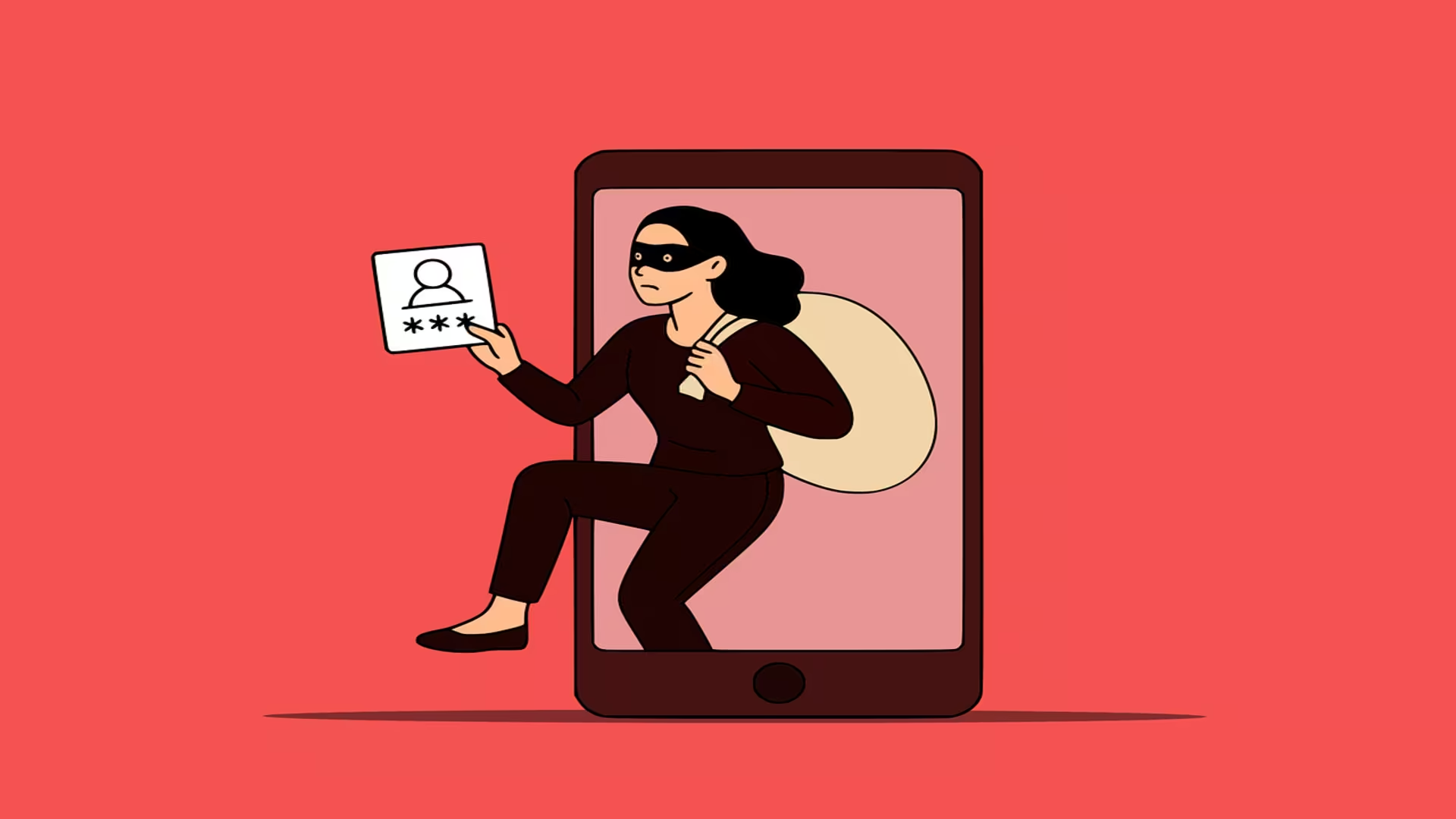
Whether it's a lost wallet, a virus on your laptop, or a data breach at a bank you've never even visited a branch of, identity theft can start in a dozen different ways. Here's what actually helps, and where to go if it's already happened to you.
What identity theft actually is
Identity theft is any situation where your personal or financial information gets used without your consent, usually for financial gain or to avoid consequences. That covers a lot of ground: someone using a stolen license to open an account in your name, unauthorized charges on a card, or a loan taken out using your bank details.
The most common types
Financial identity theft — someone uses your accounts, card numbers, or Social Security number for money, whether that's draining an account or opening new credit in your name.
Medical identity theft — someone poses as you to get prescriptions, medical devices, or treatment, often leaving false information in your medical records in the process.
Criminal identity theft — someone gives your name instead of their own when arrested or charged, using a stolen or fake ID.
Synthetic identity theft — real personal information (often a Social Security number) gets combined with fabricated details to build an entirely new, fake identity. This is one of the fastest-growing types of financial fraud and can be especially hard to detect because there's no single victim whose full identity was stolen.
Child identity theft — a child's information gets used for fraud, often going undetected for years since kids don't have credit activity anyone's watching.
Different type, same underlying fix: most of the protections below work across all of them.
How thieves actually get your information
Some of it is physical: a stolen wallet or phone, mail pulled from an unlocked mailbox, documents dug out of the trash. Some of it is digital: malware that scrapes your device for personal data, or a breach at a bank or company that exposes your records along with everyone else's. Both routes are common enough that it's worth defending against each.
The core habits that matter most
Share less by default. If you don't need to give out a piece of information, don't. Your birthday, security question answers, and details like where you grew up or went to school can all be pieced together by someone trying to impersonate you.
Monitor your accounts and credit reports. Free weekly credit reports from all three bureaus are now permanent, not just an annual perk — check them at AnnualCreditReport.com. Watch your bank and card statements too. An unfamiliar account or transaction is often the first real sign something's wrong, and catching it early makes recovery faster.
Slow down before sharing information. If someone calls or emails claiming to be from a bank, government agency, or company, ask who they work for, why they need the information, and whether you can call them back through an official number instead. Legitimate callers won't pressure you to skip that step. If in doubt, hang up and call the organization directly using a number you look up yourself.
A note on credit-related steps below: this is general guidance, not personalized financial advice.

More protective habits worth building
Use strong, unique passwords, and don't reuse them across accounts — if one account gets compromised, reused passwords mean the damage spreads. A password manager makes this realistic to actually do.
Collect your mail promptly, or switch to paperless statements so there's nothing sitting in a mailbox to steal in the first place.
Opt out of prescreened credit offers at OptOutPrescreen.com, the official site run by the credit bureaus. It cuts down on junk mail that contains enough personal information to be useful to a thief.
Consider a credit freeze if you think you've been targeted. It's free, and it blocks lenders from accessing your credit report to open new accounts in your name. One thing worth knowing: a freeze doesn't change your credit score or affect your existing accounts — it only blocks new credit report access, so your current cards and loans keep working normally. You can lift it temporarily when you actually need new credit.
Shred sensitive documents before disposing of them — old statements, pre-approved offers, anything with account numbers or your Social Security number. A basic cross-cut shredder and your regular trash or recycling is enough; there's no need to burn anything.
Run antivirus software on your phone, not just your computer. Mobile devices are just as exposed to malware as a laptop, and many antivirus providers include mobile protection in the same plan.
Turn on two-factor authentication wherever it's offered, and make sure it's actually two different types of proof — a password plus a code sent to your phone or generated by an app, or a password plus a fingerprint. A password plus a security question doesn't count as real two-factor protection, since both are just things you know, not two independent barriers.
Wipe old devices completely before getting rid of them. A factory reset removes what a thief could otherwise pull off a recycled phone or laptop.
Watch for phishing. Don't open emails or click links from senders you don't recognize, and be skeptical of urgent requests for personal information even from senders that look familiar. Teach kids and employees to do the same — they're often the easiest target.
Keep an eye on kids' online activity. Children can be talked into sharing personal information by strangers in games or chat rooms without realizing what's happening. Supervision and parental controls both help.
If it's already happened
Report it at IdentityTheft.gov, the FTC's official recovery site. Filing there generates an official Identity Theft Report and a personalized recovery plan, including pre-filled dispute letters for creditors and the credit bureaus — and it triggers your right to have fraudulent accounts blocked from your credit file within four business days. Also notify your bank directly so they can cancel compromised cards or flag fraudulent loans, and consider a police report if it involves financial loss.
Bottom line
None of these steps are complicated on their own, but stacked together they close most of the easy paths a thief has into your information. Build a few of these into habit, and you're in a much stronger position if something does slip through.
Whether due to physical theft or online scams, identity theft is a major concern that can affect anyone. Homebody offers helpful advice on safeguarding personal information, keeping an eye on credit reports, and exercising caution when disclosing information to safeguard yourself and your family against identity theft. You may secure your identity and feel at ease by adhering to these recommendations and considering using an identity theft protection service.