For most of us, our smartphones aren't just gadgets—they are our alarm clocks, mobile banks, navigation systems, and primary connection to work and family. Because they go everywhere we do, they are constantly exposed to the elements (and our own occasional clumsiness).
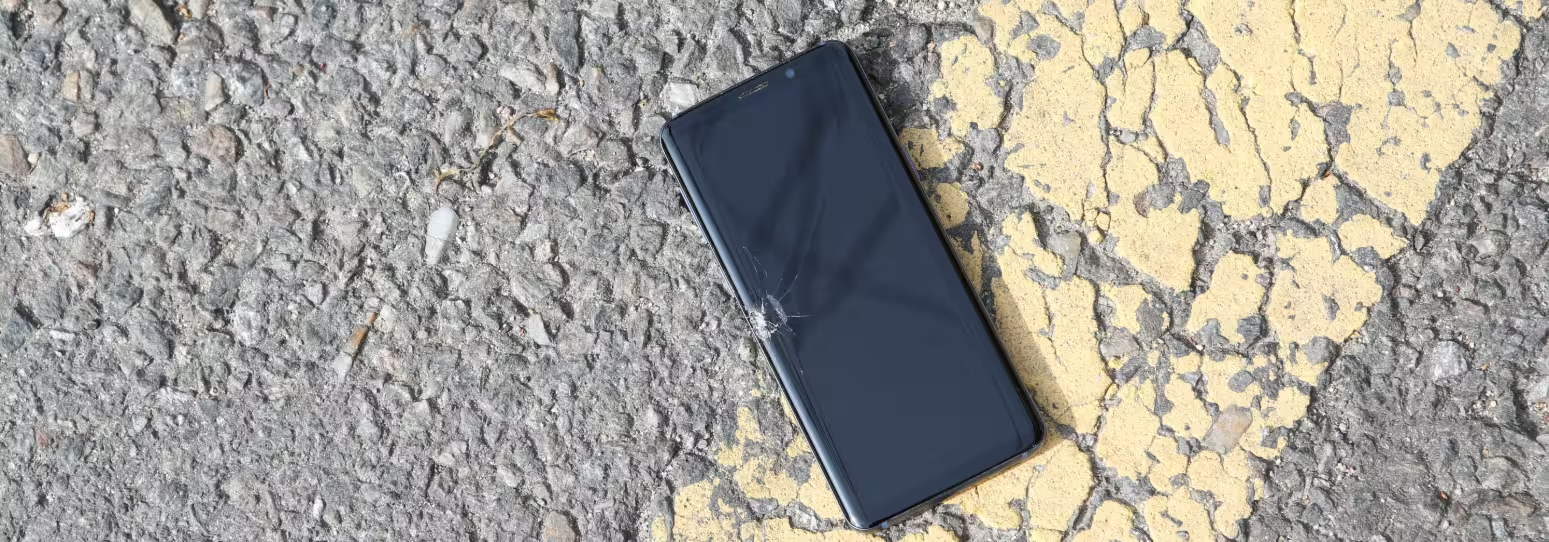
A single drop on concrete can throw your entire week sideways. If you are carrying a modern flagship phone, replacing it out of pocket can easily set you back $900 to $1,300.
Did you know? Over 50 million smartphones break each year in the U.S., and roughly two-thirds of smartphone owners experienced some form of device damage last year.
You don't need to be an insurance expert to protect your tech. Here is a straightforward breakdown of what device insurance is, what it covers, and how to decide if it's right for you.
What Is Device Insurance, Exactly?
Device insurance (sometimes called a protection plan or cell phone insurance) is a policy you purchase to help cover the cost of repairing or replacing your device when disaster strikes. It acts as a financial cushion for risks that standard warranties refuse to touch. While some industry plans cover tablets and laptops, Homebody’s device insurance focuses exclusively on smartphones.
How It Works
- Pay a Monthly Premium: You pay a small monthly fee to keep your policy active.
- Activate Your Coverage: You must formally register and activate your plan after purchase to ensure you are covered.
- File a Claim: If your phone breaks or gets stolen, you file a claim online, pay a predetermined service fee (deductible), and receive a repaired or replacement device.
- Auto-Renew: Most plans renew automatically each month, but you can cancel whenever the math no longer makes sense for you.
What Does Device Insurance Actually Cover?
Every policy has its own fine print, but a robust protection plan typically shields you from the most common daily hazards:
- Accidental Damage: Sudden drops, cracked screens, and liquid damage (from morning coffee spills to poolside accidents).
- Theft and Loss: Protection if your phone vanishes from your gym locker or gets left behind in a rideshare.
- Post-Warranty Failures: Mechanical or electrical issues that pop up after your manufacturer's warranty expires, such as failing charging ports or deteriorating batteries.
- Power Surges: Internal electrical damage caused by lightning storms or faulty wall outlets.
- Travel Coverage: Many plans offer worldwide protection, ensuring you are covered even when traveling abroad.
The Fine Print to Watch For
Insurance policies are not blank checks. Most plans feature a per-claim limit (often up to $1,000) and a cap on the number of claims you can file within a rolling 12-month period. You will also pay a deductible per claim, which typically ranges from $20 to $250 depending on the value of your phone.
What's Excluded? Device insurance strictly excludes cosmetic wear and tear (like minor scratches), intentional damage, and pre-existing conditions that occurred before you enrolled.
Device Insurance vs. Manufacturer's Warranty
A common misconception is that a manufacturer’s warranty and device insurance are interchangeable. They are actually entirely different layers of protection.
A manufacturer’s warranty (such as standard AppleCare) focuses primarily on factory defects, faulty hardware, and workmanship errors. These plans usually only last for 12 to 24 months from the purchase date and completely exclude human error like drops, spills, theft, or loss.
Device insurance (like the Homebody Mobile plan) fills the gaps left behind by the manufacturer. It operates on an ongoing, month-to-month basis and fully covers accidental handling damage, environment-related issues, and theft or loss depending on your plan tier.
The Expert Move: Rely on your manufacturer’s warranty for early factory bugs. Lean on your device insurance for the drops, spills, and post-warranty breakdowns that happen later down the road.
How Much Does It Cost?
On average, individual mobile device protection costs around $10 per month, with market rates ranging from $6 to $20 depending on the value of your device.
The monthly financial landscape varies by provider:
- Progressive: Offers coverage at an average breakdown of ~$6.38 per month, though it is billed as ~$153 every two years.
- Allstate: Plans scale based on your device, typically ranging from $8.99 to $19.99 per month.
- Asurion: Average premiums across major carrier partnerships hover between $12.00 and $15.00 per month.
- Homebody Mobile: Keeps things straightforward with a flat rate of $12.99 per month.
Homebody Device Insurance: Designed for Renters
Homebody offers a streamlined, smartphone-focused device insurance plan tailored specifically to the needs of modern renters. For a flat $5.99/month, the plan covers the smartphones in your household against accidental handling damage, liquid spills, electrical failure, and power surges.
Key Plan Details:
- Coverage Limit: Up to $1,000 per approved claim.
- Claim Frequency: 2 approved claims allowed per rolling 12-month period.
- Waiting Period: A 30-day waiting period applies before you can file your first claim.
- Flexible Repair Options: Access to over 9,000 walk-in repair locations for quick fixes (like screen replacements), or a certified refurbished/new replacement if the phone is totaled.
- Tiered Service Fees: Fees scale logically by device value. For example, a $49 repair fee applies to phones valued under $500, while a $199 replacement fee applies to premium devices in the $500–$999 range.
Homebody device insurance strictly covers smartphones. If you need to protect laptops, tablets, or televisions, you will need to look into separate, dedicated electronics policies.
Does Homebody Renters Insurance Cover My Phone?
No. Standard renters insurance does not include day-to-day device protection for your phone. Renters insurance is designed to protect your belongings from major, catastrophic risks—like an apartment fire, a burst pipe, or a home break-in.
- Scenario A: Someone breaks into your apartment and steals your phone. Renters insurance may help cover it (after you pay your standard policy deductible).
- Scenario B: You fumble your phone on the sidewalk and shatter the screen. Renters insurance will not cover this.
- Scenario C: You leave your phone in a coffee shop or a taxi. Renters insurance will not cover this.
To get complete peace of mind, the smartest strategy is pairing Homebody renters insurance with Homebody device insurance. One protects your living space; the other protects the device that runs your life.
Is Device Insurance Right for You?
Insurance isn't a one-size-fits-all purchase. To figure out if a policy is worth it for you, ask yourself these three questions:
- The Budget Test: If your phone broke today, could you comfortably spend $800+ to replace it tomorrow without hurting your savings?
- The Environment Test: Do you commute on crowded public transit, work outdoors, travel frequently, or live with young kids or pets?
- The Track Record Test: How often have you cracked a screen or misplaced a device over the last few years?
If a sudden, massive tech bill would disrupt your financial life, trading that unpredictability for a predictable, modest monthly payment is a smart business decision for your personal budget.
Smartphones are expensive, essential, and surprisingly easy to damage. Device insurance helps cover repairs or replacements when your phone is damaged, stolen, lost, or experiences post-warranty mechanical failures. Unlike a manufacturer’s warranty, which only covers defects, device insurance protects against everyday risks like drops, spills, and theft. Most plans require a monthly premium and deductible, but can save you hundreds—or even thousands—on unexpected replacement costs. For renters, pairing device insurance with renters insurance creates more complete protection, covering both your home and the device you rely on every day.